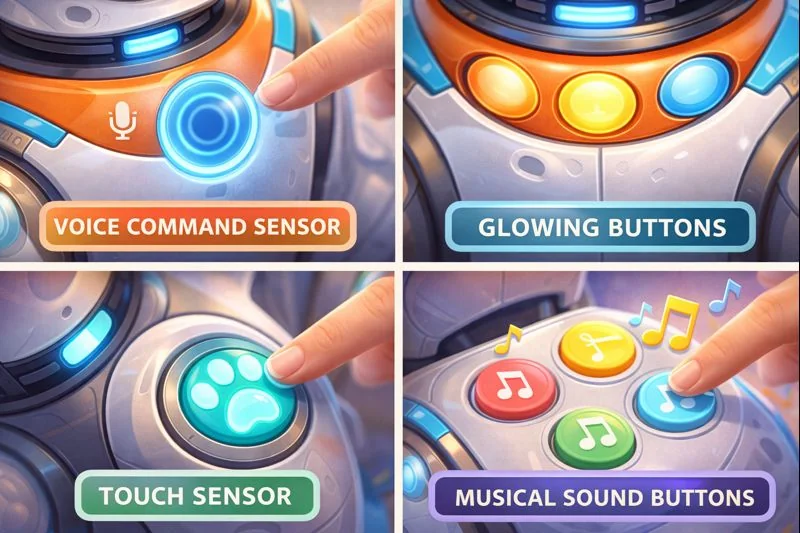
Close-up illustration of interactive toy buttons and sensors

Interactive Toy Features Explained: What Parents Should Actually Look For

Interactive toys are often described using feature-heavy language, which can make it difficult for parents to understand what truly matters. Buttons, sensors, sounds, and movement are common, but not all features add value to play.

This guide breaks down common interactive toy features and explains which ones tend to support meaningful play for children.

Why Toy Features Matter More Than Labels

Marketing terms often focus on what a toy claims to do, not how it behaves during play.

Parents benefit most from:

  • Understanding how features work

  • Knowing how children interact with them

  • Evaluating whether features match a child’s age and play style

Features should support play, not distract from it.

Buttons and Touch Controls

Buttons are one of the most common interactive features.

Well-designed button features:

  • Respond immediately

  • Are easy to press

  • Produce consistent results

Too many buttons or unclear responses can confuse younger children.

Motion and Movement Features

Some interactive toys move on their own or respond to motion.

Parents should consider:

  • Whether movement is slow and controlled

  • If motion is predictable rather than sudden

  • How movement affects safety during play

Gentle, purposeful movement usually works best for children.

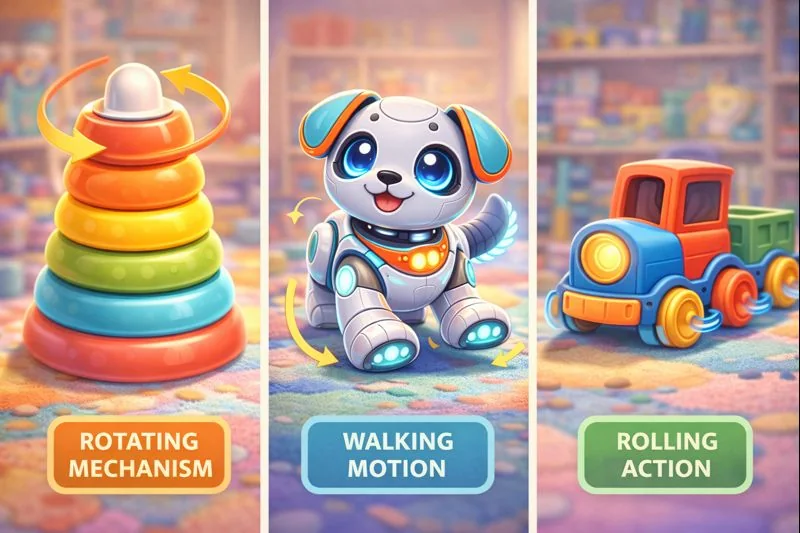
Illustration showing movement features in children’s toys

Sound and Audio Responses

Sound features include music, effects, or spoken phrases.

Useful sound features:

  • Are clear and not overly loud

  • Can be turned off or adjusted

  • Respond only when the child interacts

Constant or unchangeable sound can reduce long-term play value.

Light and Visual Feedback

Lights are often used to signal responses.

Effective visual features:

  • Are subtle rather than flashing

  • Support understanding of cause and effect

  • Do not overwhelm the senses

Lights should guide play, not dominate it.

Sensors and Responsiveness

Some toys include basic sensors for touch, movement, or sound.

Parents should ask:

  • Does the toy respond reliably?

  • Is the response easy to understand?

  • Does the sensor support exploration?

Unreliable sensors can frustrate children and reduce engagement.

Modes, Settings, and Customization

Some interactive toys include multiple modes.

Parents may want to consider:

  • Whether modes are clearly explained

  • If switching modes is simple

  • Whether modes actually change play meaningfully

Too many modes can feel complicated, especially for younger children.

Offline vs Connected Features

While some toys include connectivity, many features function offline.

Offline features often:

  • Reduce setup complexity

  • Limit distractions

  • Focus play on physical interaction

Parents should evaluate whether connectivity adds value or unnecessary complexity.

Durability of Interactive Features

Features should withstand repeated use.

Parents should check:

  • Buttons that do not stick

  • Moving parts that feel sturdy

  • Consistent responses over time

Durable features support longer-lasting play.

Matching Features to Your Child’s Play Style

Different children enjoy different interactions.

Some prefer:

  • Predictable cause-and-effect

  • Movement and sound

  • Imaginative or role-based responses

Choosing features that align with how a child naturally plays improves satisfaction.

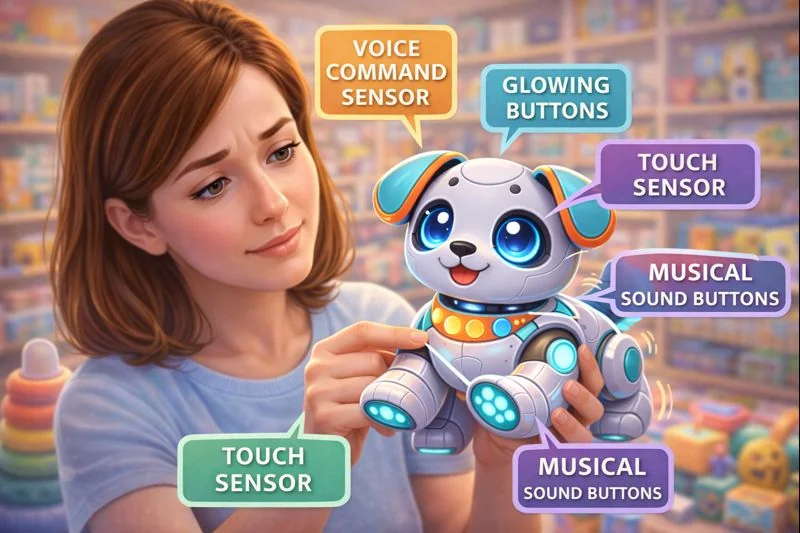
Parent examining interactive toy features before purchase

Avoiding Feature Overload

More features do not always mean better play.

Parents should be cautious of toys that:

  • Try to do too much

  • Overstimulate with constant feedback

  • Leave little room for imagination

Simplicity often supports deeper engagement.

Final Thoughts for Parents

Interactive toy features are most valuable when they support exploration, creativity, and enjoyment without overwhelming the child. By focusing on how features work rather than how they are marketed, parents can make more informed and confident decisions.

The best features are those that feel intuitive, durable, and appropriate for a child’s age and interests.