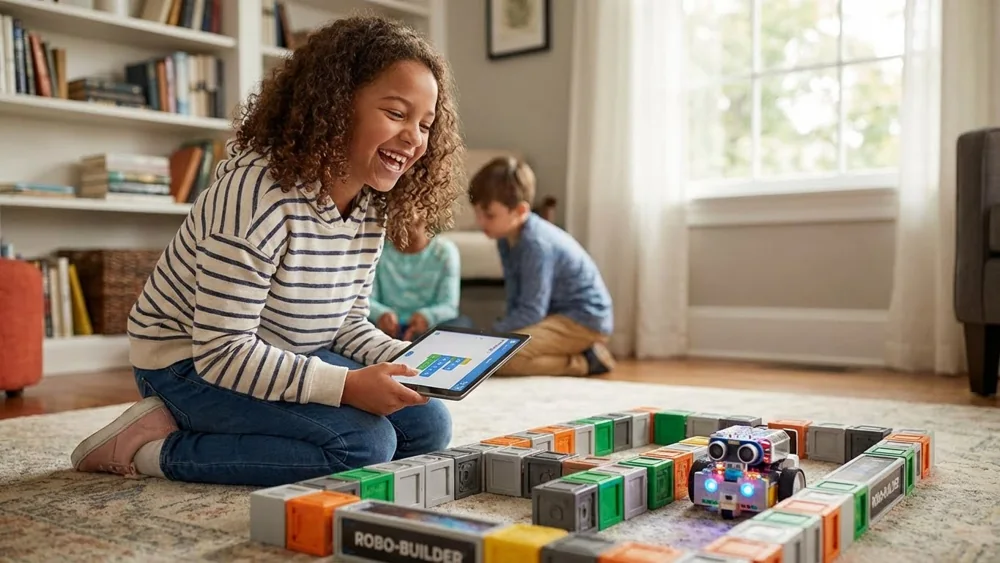
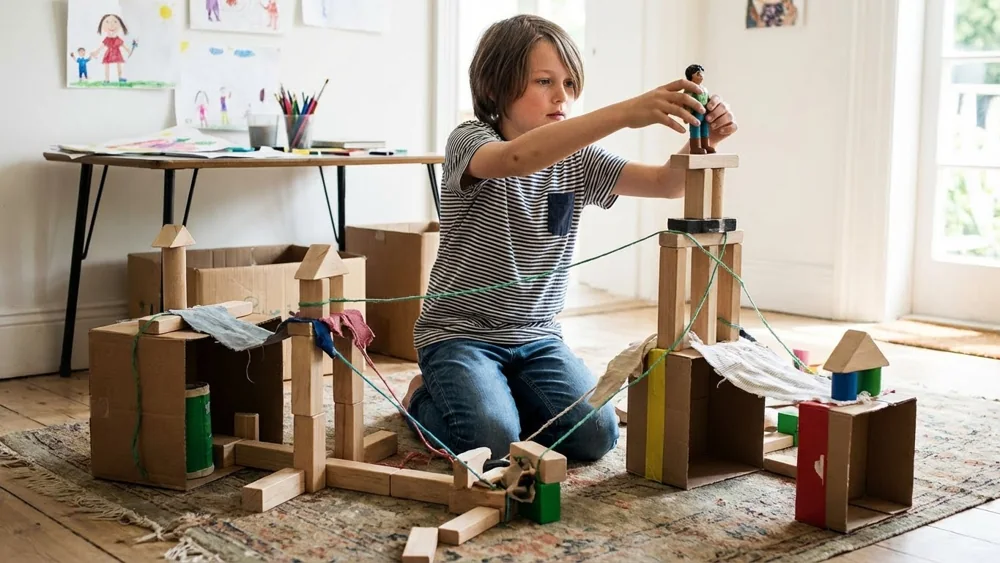
By the age of nine and beyond, children develop stronger independence, longer attention spans, and more defined interests. Play at this stage becomes more selective. Children often want toys that feel meaningful, customizable, or challenging rather than purely reactive.
Interactive toys for kids ages nine and up should respect this growing maturity while still supporting creativity, curiosity, and enjoyment.

Older children often:
Seek purpose or progression in play
Enjoy experimenting with features and outcomes
Prefer toys that allow control and customization
Play is no longer just about reaction; it becomes about exploration, mastery, and personal choice.
Good interactive toys for this age group typically:
Offer deeper interaction rather than novelty alone
Allow children to make choices that affect outcomes
Remain engaging over longer periods
Toys should feel flexible rather than repetitive.
Children ages nine and up enjoy discovering how systems work.
Interactive toys can support this by:
Allowing experimentation without strict rules
Responding differently to varied inputs
Encouraging exploration at the child’s pace
These experiences help children feel ownership over their play.
Imagination remains important, but it becomes more structured.
Interactive toys may:
Support storytelling or role-based play
Allow personalization of behavior or routines
Be combined with other toys or activities
Toys that adapt to a child’s ideas tend to hold interest longer.
Interactive toys for toddlers should ideally be:
Screen-free
App-fre
Older children can handle more complexity, but balance is still important.
Parents should look for toys that:
Avoid constant noise or forced interaction
Allow quiet or paused play
Respond only when the child chooses
This supports focus and prevents fatigue or overstimulation.
e
Offline
This keeps play focused on hands-on exploration rather than digital interaction.
At this age, some interactive toys may introduce optional app features.
Parents should consider:
Whether connectivity adds real value
If the toy functions independently
How screen use fits into family routines
Many families still prefer toys that work without screens, even for older children.
Children may handle toys more roughly at this stage.
Parents should ensure:
Materials are durable and well-finished
Moving parts feel solid
Battery and charging systems remain secure
A toy that feels fragile may quickly lose appeal. Also, safety considerations of interactive toys in other aspects are also important as the child starts behaving more like teens.
Older children are often ready to:
Take responsibility for storing toys
Handle charging or battery replacement with guidance
Care for toys over longer periods
These habits support independence and accountability.
An interactive toy may not be suitable if:
The child prefers creative or non-toy activities
Interest fades quickly after initial exploration
The toy feels too restrictive or childish
Children at this age have diverse interests, and toys should respect that.
Parents can support healthy play by:
Showing interest without controlling play
Asking children to explain what they enjoy
Respecting when a child outgrows certain toys
Guidance shifts from supervision to support.
For children ages nine and up, interactive toys should support independence, creativity, and sustained engagement. The best toys for this stage respect a child’s growing autonomy while still offering opportunities for exploration and enjoyment.
Thoughtful selection helps ensure toys remain meaningful rather than quickly outgrown.