Interactive Toys for Preschoolers (Ages 3–5): A Parent’s Guide

Between ages three and five, children become more curious, imaginative, and capable of following simple patterns. Interactive toys for this stage should encourage exploration, pretend play, and basic problem-solving without becoming overwhelming.

This guide explains what works best for preschoolers and what parents should look for.

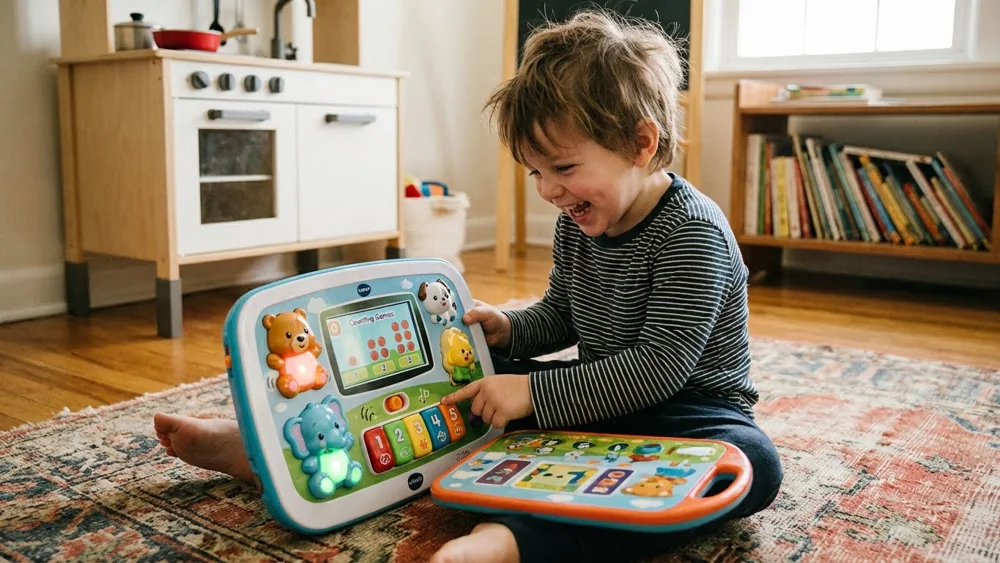
Preschool child playing with an interactive toy

How Preschoolers Learn Through Play

Children ages 3–5 often:

  • Enjoy experimenting with different actions

  • Begin to understand simple rules and routines

  • Use imagination to create stories and roles

Interactive toys can support these skills by responding in predictable, engaging ways.

What Makes an Interactive Toy Suitable for Ages 3–5

Good interactive toys for this age typically:

  • Offer multiple simple responses (not too many modes)

  • Encourage pretend or role-based play

  • Respond clearly to buttons, touch, or movement

Toys should remain intuitive without requiring reading or complex instructions.

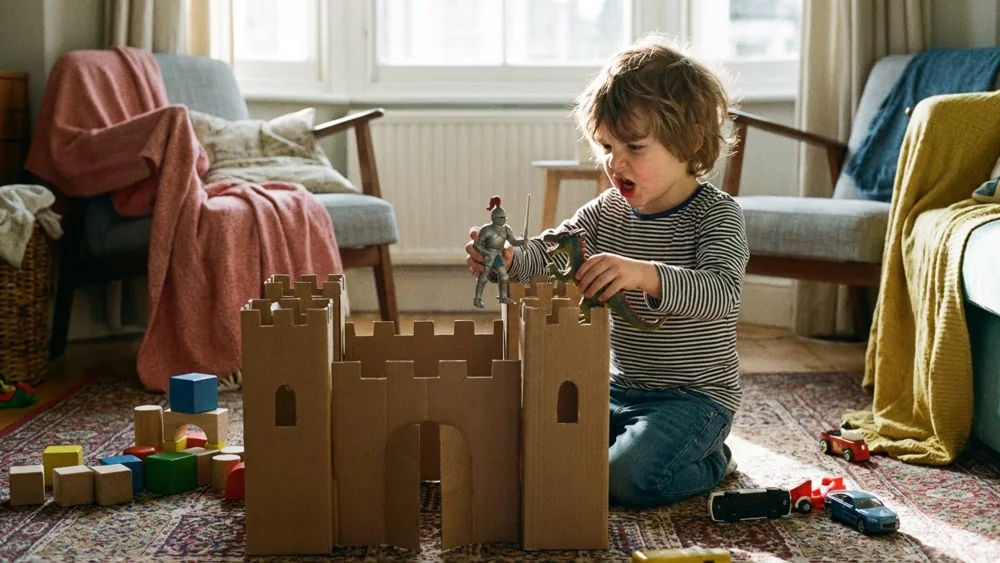
Preschooler engaged in pretend play with toys

Safety and Durability Considerations

Parents should ensure:

  • Parts are sturdy and well-attached

  • Battery compartments are secure

  • Sounds and movements are age-appropriate

Preschoolers play actively, so durability matters.

Screen-Free and App-Free Play

Many families prefer toys that:

  • Work without apps or screens

  • Keep play hands-on and physical

  • Reduce reliance on phones or tablets

Screen-free interactive toys often fit well into preschool routines.

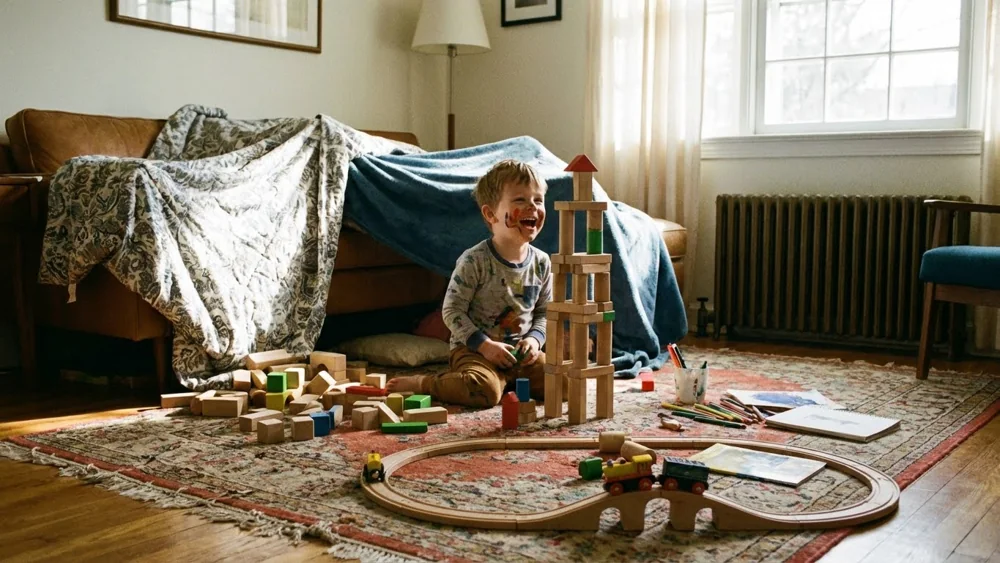
Child enjoying screen-free play with toys at home

Encouraging Social Play

At this age, children begin playing with others more often.

Interactive toys can:

  • Support turn-taking

  • Encourage shared attention

  • Spark conversation during play

Parents can join briefly to model cooperation and sharing.

Signs a Toy May Not Be the Right Fit

A toy may not suit ages 3–5 if:

  • It causes frequent frustration

  • Instructions are too complex

  • The toy overwhelms with sounds or actions

Balanced stimulation is key.

How Parents Can Enhance Playtime

Parents can:

  • Ask open-ended questions during play

  • Rotate toys to keep interest fresh

  • Encourage children to explain what the toy is doing

Simple conversation adds learning value.

Final Thoughts for Parents

For preschoolers ages 3–5, interactive toys should support imagination, exploration, and social play while remaining safe and simple. When chosen thoughtfully, they can become valuable tools in everyday play.